My latest DIY Linestage is now complete.
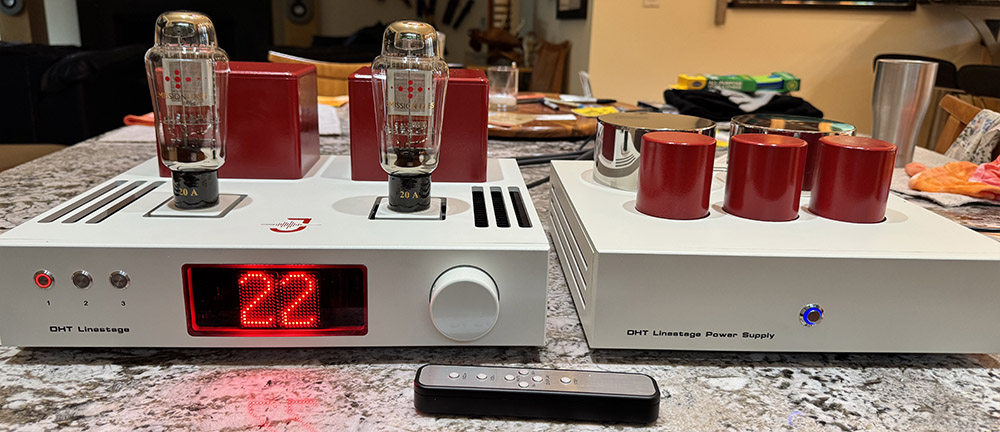
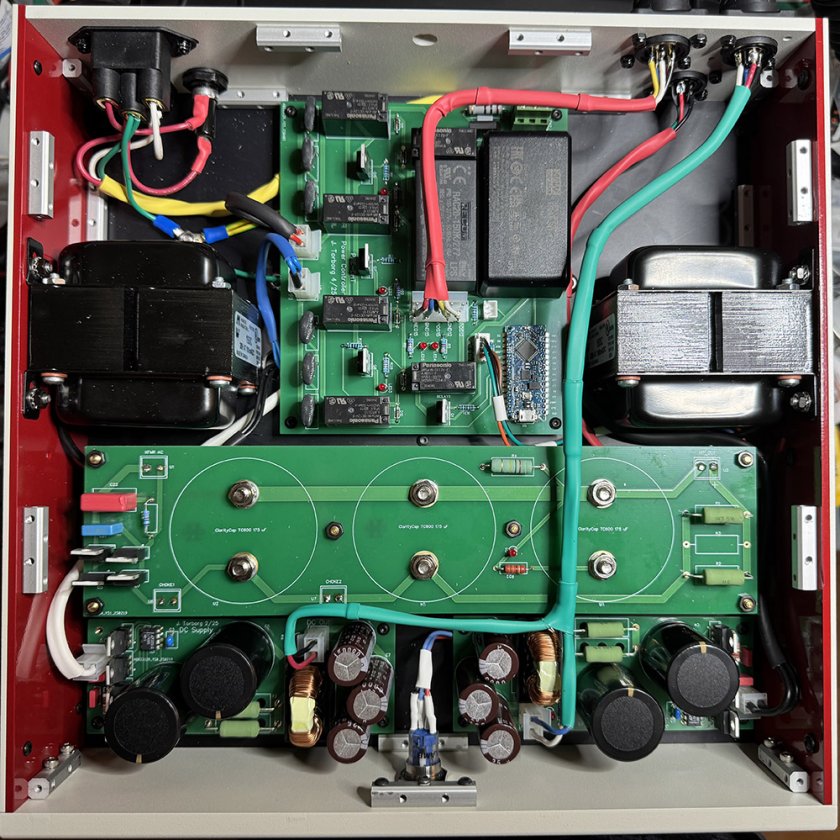
This is a two chassis design - power supply in one chassis and all audio circuitry in the second chassis.
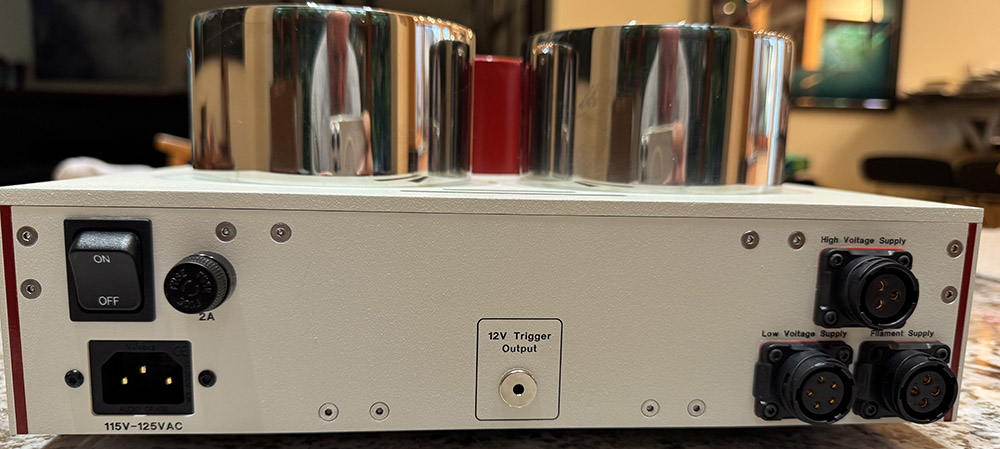
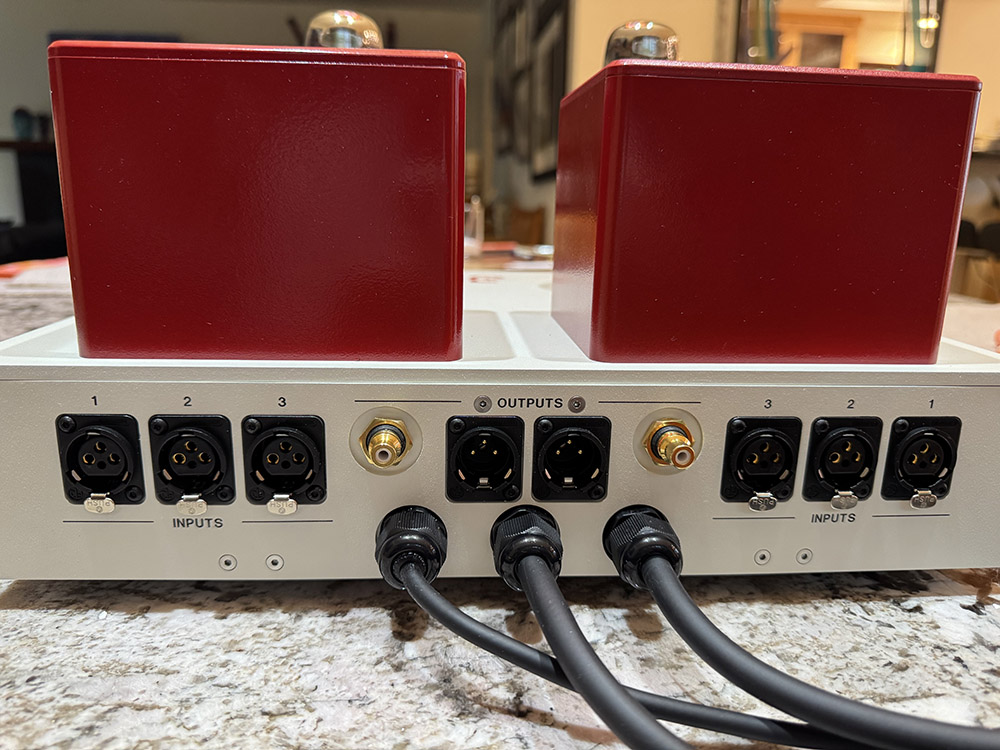
There are three umbilical cords - one for the B+ and chassis ground, one for the two filament supplies, and one for the low voltage supplies (+/- 15V and + 12V).
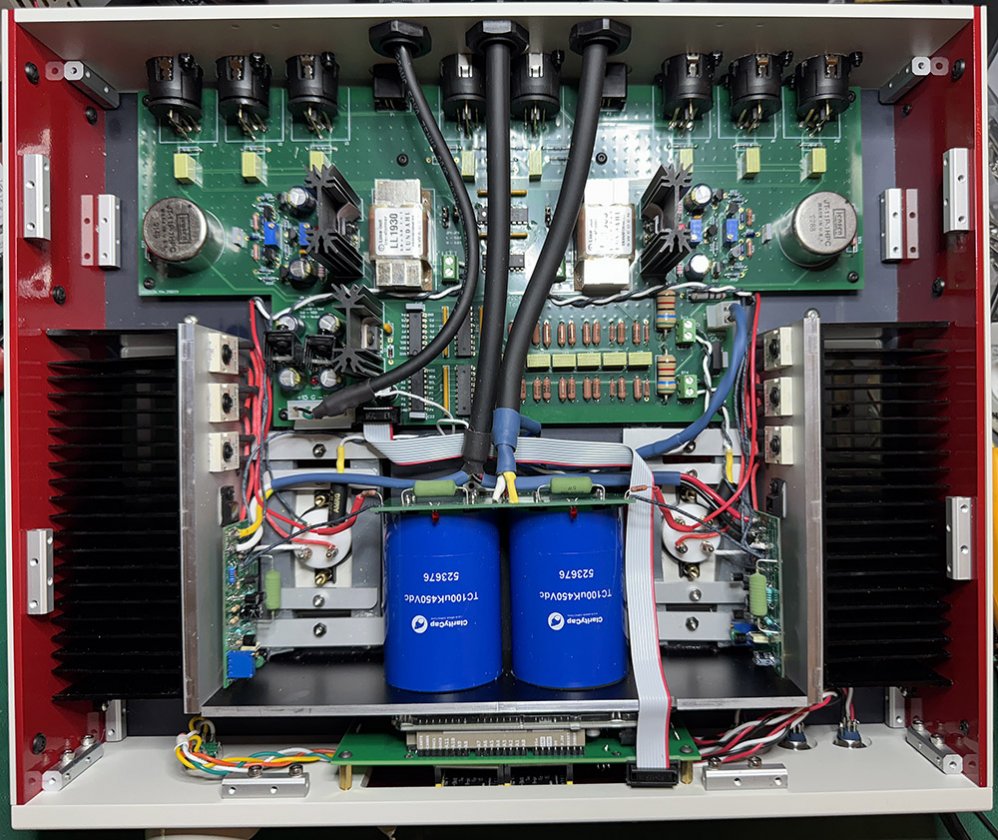
The main chassis includes relay switched inputs with Jensen input transformers to convert balanced to single ended. The single-ended signals are then attenuated by a relay-switched attenuator. This feeds two separate line stages - a discrete solid state line amplifier with JFET inputs and BJT outputs which drive the RCA outputs (to connect to single ended subwoofer inputs), and a DHT stage employing EML 20A triodes. The triodes use a Lundahl choke load and employ filament bias using Rod Coleman current regulators. The plates are AC coupled to a Lundahl line output transformer, currently configured as 11.8:1, so the overall gain is about 3db with an output impedance of about 50 ohms.
An Arduino microcontroller is used to control the input selection and stepped attenuator and drives a large bright LED matrix display (so I can easily see it from across the room with my declining vision).
The power supply is controlled with another Arduino processor to provide a soft start for both the B+ and Filament supplies, and a 12V trigger output. The filament supplies are turned on 30 seconds before the B+, and stay on for 30 seconds after B+ is turned off on power off.
There are no electrolytic caps in the B+ supply (or audio circuitry). The B+ uses a 10H choke input feeding a 175uF Polypropylene Clarity cap followed by another 10H choke into another 175uF cap, which feeds another 175uF cap through resistors to adjust the B+ voltage. The B+ is split in the main chassis through separate resistors and 4-terminal 100uF Kelvin capacitors.
I haven't had a chance to listen to it much yet, but if sounds very nice so far.

