I've seen and heard Barefoot ones before. They're made here in PDX and the custom painted ones are done by one of my customers at work. Good at what they are, but my NX-Studios wipe the floor with them. Don't tell em I said that though.
He just read your response!

Regarding your assessment on his Barefoot monitors, take this in consideration.
Room acoustics vs. speaker accuracy, why the comparison environment matters as much as the speakersBeen mulling over something worth separating out clearly: when we compare monitors/speakers by ear, how much of what we're hearing is the speaker vs. the room?
Untreated room comparisons are not measuring speaker accuracy. Room modes, boundary reinforcement, and early reflections can shift the response at the listening position by 15-20+ dB, often more than the actual difference between two well-designed monitors. Since both speakers get filtered through the
same room's transfer function, some relative comparison survives (especially mid/treble clarity, imaging), but bass response comparisons in an untreated room are close to meaningless, you're mostly hearing your room's modal signature, not the speaker's low end. Level-matching also gets skipped constantly in casual A/Bs, which alone biases perceived "clarity" toward whichever speaker is louder.
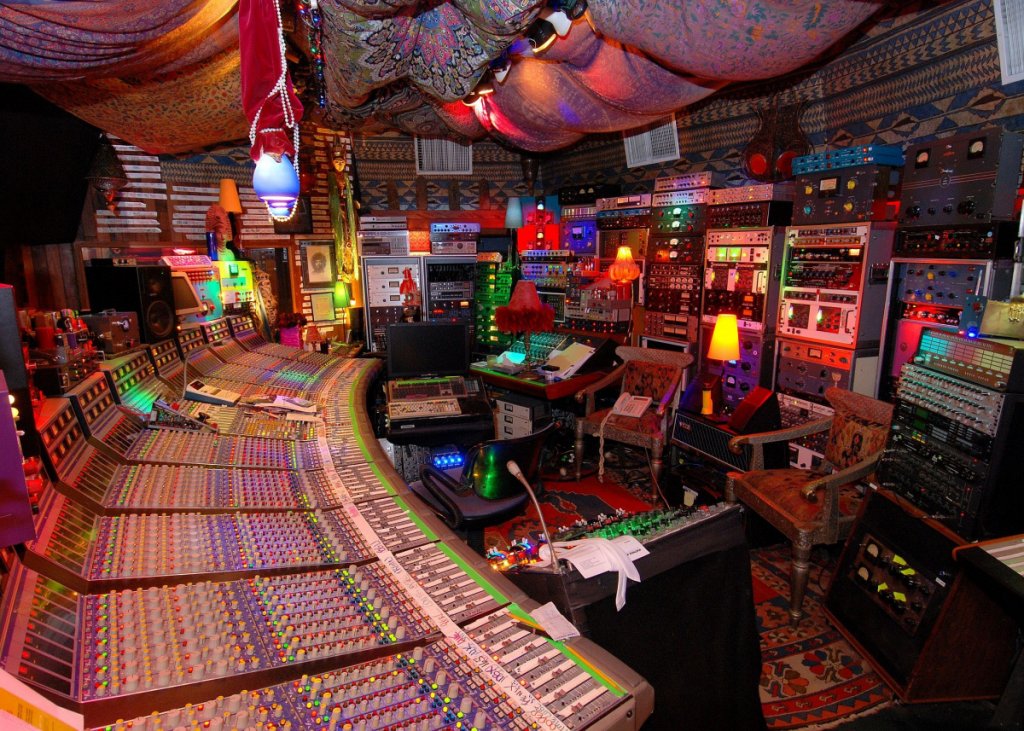
Even an ideally treated audiophile room isn't acoustically equivalent to a pro control room, for a few structural reasons treatment alone doesn't erase:
- Room volume/Schroeder frequency Smaller rooms have more of the spectrum governed by discrete modes rather than diffuse field behavior, no matter how well-treated
- Soffit mounting - Pro rooms flush-mount mains into the front wall, eliminating cabinet diffraction and front-wall boundary cancellation entirely; freestanding home speakers can't fully replicate that
- Design intent -RFZ/LEDE control rooms are built for translation accuracy; audiophile treatment is often (legitimately) optimized for soundstage/spaciousness instead, which is a different brief
- Formal symmetry/calibration standards (ITU-R BS.1116-style geometry, RT60 targets) that retrofitted rooms rarely hit from the studs out
Bottom line: a well-treated home room is genuinely useful and fairly trustworthy for mid/treble/imaging comparisons and serious critical listening just not a valid stand-in for reference-grade translation accuracy, particularly in the low end, where the gap between home and pro rooms is largest.
Curious how others here who've worked in both treated home rooms and pro control rooms would characterize the gap, does it match your experience, or do you think good treatment closes it further than I'm giving it credit for?
-----------------------------------------------------------------------------------------------------------------------------------------------------------------------
Wanted: Volunteer to find a loose connection in the room!