Advice needed, Looking at a Lampizator Amber 5, Have some reservations

joessportster

  • Jr. Member
  • Posts: 297
  • Set & Single Driver Bliss
OK, cool.

To clarify, this is your "new" system: PC directly into the Lampizator Amber 5 via USB; Coincident Statement linestage, and a pair of Williamson amps.

I took the Coincident out of the chain. PC directly into DAC VIa Curious Cable USB, DAC directly into Williamson amps using a Gabrial Gold interconnect, Speaker cables are GR Research clone of Kimber 12tc, Speakers are John Kalinowski Seas Bookshelves (Massive Bookshelves at 22 x 16 x 15 )

The Tubes in the DAC are 12au7, Ecc99, & 6x5............I dont honestly know what brand tubes are in it. They sealed the bottom & I have not decided fully on the DAC and figure "IF" I decide to sell It would move better if the seal were intact. I dont get emotionally attached to gear. If it does not please me I sell it in search of something better to my ears

I will investigate the Ember cable

WGH

I was unfamiliar with the John Kalinowski Seas Bookshelf speakers. I have SEAS drivers in my speakers and was wondering if their Exotic F8 full range driver's sound have the same precise, fast, revealing sound characteristics. Based on the linked review it seems they do.

http://www.tnt-audio.com/casse/seas_exotic_e.html

The builder wrote: "I used a 0.68 Jantzen ribbon inductor with a Mills 15 Ohm resistor. I initially used 12 Ohms ceramic resistors, but decided that reproduction was a bit too bright for my taste and changed them for the 15 Ohm resistors. Playing with these values will give you an opportunity to finetune the speakers to your taste."

I have always found that single driver speakers to be very coherent with a spooky ability to disappear.

Early B.

I took the Coincident out of the chain.

Put it back. I betcha $100 it sounds better with the Coincident.

joessportster

  • Jr. Member
  • Posts: 297
  • Set & Single Driver Bliss
Put it back. I betcha $100 it sounds better with the Coincident.

I wont bet as hearing is so subjective. I would bet MANY would agree with you & honestly I likely will put it back in. BUT with the current set up if any addition / removal of cables, tubes or ? happens.  I think the shorter chain will be more telling of the results. Less gear makes it easier to discern differences IMHO

Now if I can get more than 1 hour of decent weather for a real listening session. Here in NC dealing with the clowns at duke energy. The slightest wind may take out power. I try to stay off the system when odds are great that we will lose power.

joessportster

  • Jr. Member
  • Posts: 297
  • Set & Single Driver Bliss
Scored a Hapa Ember USB Cable last night off Ebay. Should see it next week some time. will compare to my Curious Cable. Hoping it might help that last little bit.

The Seas drivers are superb, i have owned & used several Lowthers, AER, Lii, Jordan, Omega, & many others. Too date the SEAS are by far my favorites. They Image like mad in the John K. cabinets. Bass is superb no REAL need for subs. Mine are barely broken in with maybe 250 hours. I bought them new and I built the cabinets based off Johns design I am very happy with them.  Last night at 2am I swapped in the pure copper Digital Amp Co. speaker wires and did not completely solve the issue at hand but it was late and I was tired so will have to see today if I get a better outlook. Might swap in some 807 tubes for the Russian 6p3s I have been running

joessportster

  • Jr. Member
  • Posts: 297
  • Set & Single Driver Bliss
Preface this by stating I have never been a big fan of High Res files. I am basically content to listen to RedBook.......I started out with Vinyl and my Journey with Digital started out as 1 of necessity. Once you get used to having instant access to THOUSANDS of albums its hard to go back to Vinyl.  (Impossible for me, an Essential tremor prevents me from setting up a cartridge)

So that said. I want my digital to be as close to vinyl (analog) as I can afford. I like the Lampi Amber 5 but it still has that little bit of BITE that drives me away. I am not giving up yet. Today I landed an Audiophilleo ap1 with Pure Power.......I know it forces me to SPDIF (I am fine with that) From my past experiences with AP1 & PP it will basically KILL jitter & USB Noise down to nothing. So I hope to see the ap1 next week and will report back if that takes the Lampi over the top

I still refuse to pull the top case off and swap the stock 12au7 out. If the Lampi gets the 2 thumbs up by using the AP1, I will then start the tube rolling process.  Robert at Lampi NA  said I could swap tubes with no loss of Warranty, but I want to be able to show it has had no tampering with it at all should I have to part with it

Thanks to all that have chimed in with advice. I am sure I have some scratching there heads with my desired sound sig and sticking with RedBook

Early B.

Preface this by stating I have never been a big fan of High Res files. I am basically content to listen to RedBook.......

...I am sure I have some scratching there heads with my desired sound sig and sticking with RedBook

Nah. I roll with Redbook, too. High Res sounds a tad pristine. Real music is muddy.   

WGH

I'm not surprised that music lovers prefer the Redbook format with a properly designed DAC. A NOS DAC playing 44.1 files adheres to the Nyquist frequency limit when playing Redbook audio, enforcing a strict low-pass filter curve that cuts off right at or just before 22.05 kHz. The Amber 5 uses a custom ESS Sabre-derived delta-sigma Code 53 Engine 11 DAC board, which are always oversampling internally by design.

While Code 53 respects the strict mathematics of the Nyquist limit, Lampizator programs custom noise-shaping algorithms and filter slopes rather than using standard off-the-shelf IC filters. Instead of a generic, ultra-steep linear phase filter that introduces artificial "pre-ringing" artifacts, they favor a optimized filter curve designed to preserve time-domain performance and phase accuracy. This roll-off curve allows the Amber 5 to mimic the transient response of a NOS DAC while mathematically satisfying the Nyquist criteria required by its delta-sigma architecture.

Amber's Code 53 engine feeds directly into vacuum-tube analog output stage. This analog filter acts as a natural, smooth low-pass mechanism. It naturally rolls off high-frequency digital artifacts without adding the harsh phase rotation or steep group delay typical of cheap solid-state operational-amplifier (op-amp) output stages. The Amber 5 sound characteristics utilizing both digital and analog filters is similar to a NOS R2R ladder DAC while utilizing delta-sigma processing core logic.

Downsampling hi-res files or using SPDIF will apply the same high frequency rolloff.


This is what a texbook Nyquist frequency curve looks like on my HoloAudio May DAC, notice the 44.1 high frequency rolloff. A high-res file extends the high frequencies.
https://www.stereophile.com/content/holoaudio-may-level-3-da-processor-measurements

The HoloAudio May's frequency response in NOS mode (Green) with data sampled at 44.1, 96, and 192kHz. All three responses start rolling off in the top two audio octaves. With 44.1kHz data (green and gray data), the rolloff reaches –1.5dB at the top of the audioband, but the measured level is adulterated with aliased image energy. The actual rolloff is probably closer to –3dB at 20kHz. The response at the higher sample rates is down by 1dB at 19kHz (96kHz data, cyan and magenta traces) and 22kHz (192kHz data, blue and red traces)


WGH

The Audio Note DACs are also non-oversampling and are rarely measured. The frequency response graph for the DAC1 has a similar high frequency roll off.
https://www.l7audiolab.com/f/audionote-dac-1/


Many audiophiles prefer the mellow, soothing NOS sound. Add in JRiver's happy little bass bump and you have the equivalent of comfort food.

WGH

If you are still hearing etch and sibilance with the Amber 5 then it might be in the recordings. I have a few copies of Jeff Beck's Blow by Blow. The original CD is so bright and piercing it is unlistenable, the hi-res PCM isn't much better, only the SACD fixes the bad original mix. The original Straight Wire Encore I cables were horribly bright, it took me a few years to figure out my mistake. The Klipsch Quartet speakers sounded fantastic with the NAD 7155 receiver I bought in 1985 but when the NAD was replaced with higher quality separates the Klipsch didn't sound that great anymore.

One problem was I didn't have a point of reference.


2L - The Nordic Sound sells reference recordings, all are recorded live in a large space using state-of-the-art recording techniques. 2L had free DSD sample tracks back in 2022, the tracks are no longer available but I got them all before they disappeared, many are DSD256. I put the zipped 4.69 GB sampler on my Google Drive, you can download it here:
https://drive.google.com/file/d/1e0Rzeo5UPx__75wbneGlkdgLk-8THdIo/view?usp=sharing

If you hear any etch or sibilance in these recordings then it is being caused by something else in your system (and probably not by the Amber 5). You should be able to listen to these tracks as loud as you want without strain or pain.


Innocense - Hoff Ensemble – Polarity album


Chromatic Fantasia and Fugue in D minor - Christian Grøvlen - BACH – Inside Polyphony album


Arnesen: MAGNIFICAT 4. Et misericordia - Nidarosdomens jentekor & TrondheimSolistene


WGH

I have a few Sound Liason recordings, all are excellent. No DSD samplers are available, the only way to hear is to buy. I have Blusey May by Carmen Gomes in DSD256, it is another reference recording. Blusey May was recorded in DSD256, Frans de Rond explains their process in his latest blog below. The recording is very transparent and Carmen is close miked. If the recording has any harsh sibilance or high-frequency hissing or "ess" sound then the problem it isn't in the recording.
https://soundliaison.com/products/carmen-gomes-inc-bluesy-may
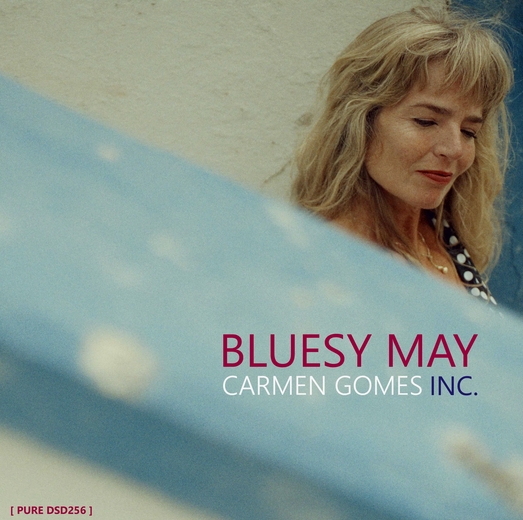


From Studio to Living Room: Preserving the Emotion of a Performance

By Frans de Rond, Engineer at Sound Liaison

Every recording starts with one thing: the music.

At Sound Liaison, our goal has never been to create perfect recordings. Instead, we strive to capture something far more valuable: the essence and emotion of a musical performance. Technology is important, of course, but it should always serve the music, never the other way around.

For us, the journey of a recording begins long before the microphones are placed in the studio. It starts with finding musicians and ensembles that share our philosophy. We are always searching for artists who understand the beauty of acoustic music and who are willing to embrace a recording process that prioritizes honesty, spontaneity, and musical interaction.

Whenever possible, we record with a single stereo microphone. The simplicity of a One Mic recording remains one of the most powerful ways to capture a performance. Not every ensemble is suitable for this approach, however. Some instrument combinations require additional support, and in those cases we carefully complement the main stereo microphone with a limited number of spot microphones. The objective remains the same: preserve the natural balance and interaction of the musicians while maintaining a realistic soundstage.

Preparation is a crucial part of the process. Before entering the studio, we spend considerable time discussing the repertoire and making sure everyone understands what lies ahead. This is particularly important for a pure One Mic recording. The musicians know that the focus is entirely on the performance and the moment itself. There are few opportunities for repair afterwards. No endless editing. No assembling a performance note by note.

Interestingly, this limitation often becomes a strength. The concentration increases. The intention becomes stronger. Everyone listens more carefully. The result is a performance that feels alive because it truly is alive.
Sound Liaison One Mic Recording

Today, we record most of our sessions in DSD256. This format allows us to preserve an extraordinary amount of information and makes the concept of One Band & One Mic even more compelling. The transparency and realism of DSD256 help us capture the subtle details that make acoustic music so engaging.

Once the recording session is finished and everyone is satisfied with the takes, we do something that may seem unusual: we put the project aside for a few weeks. We do this intentionally.

Immediately after a recording session, musicians often remember every small imperfection, every note they wished they had played differently. By allowing some time to pass, those memories fade. When the listening copies arrive a few weeks later, the musicians can approach the recordings with fresh ears and a more objective perspective. Often they discover that what felt like a mistake during the session actually contributes to the character and authenticity of the performance.

After the band and our producer, Peter Bjørnild, have approved the selected takes, I begin the editing process. Our edits are generally very simple. Think of attaching the coda from Take 3 to Take 2, or replacing a short section with material from another performance.

The majority of each song remains a single continuous take. Sometimes an entire track is exactly as it was performed in the studio. By keeping the editing minimal, we preserve the natural flow and energy of the music. It is remarkably easy to edit the life out of a performance. We try very hard not to.

Once the edits are completed, we schedule a separate mixing session. This separation is important because it allows us to return with fresh ears.

Mix days usually start early in the morning. Our hearing is less fatigued and our judgment tends to be more reliable. Before the musicians arrive, I prepare a mixing setup that gives us a solid starting point. Usually one or two members of the band join the session. Their input can be invaluable, particularly when it comes to artistic intentions, arrangements, or personal preferences.
Sound Liaison One Mic Recording

We aim to complete a mix within one or two days. The musicians then take the mixes home and listen in their own environment. After receiving their feedback, I create the final mix.

At this stage, it is important that the recording carries the Sound Liaison signature. For us, that means an open and dynamic sound with a realistic stage and a natural sense of space. The listener should feel as though the musicians are performing in front of them, not trapped between two loudspeakers.

When the final mix is approved, I move on to mastering. For us, mastering is not about making the music louder. It is about presentation. I determine the final sequence of the tracks, clean up the beginnings and endings, establish the appropriate spacing between pieces, and prepare all metadata and artwork. The goal is to create a seamless listening experience from beginning to end.

Once all necessary steps have been completed, the final stage begins: conversion.

The original DSD256 master is sent to Tom Caulfield in the United States. Using state-of-the-art software and an extremely careful workflow, he converts the master into all available delivery formats. When the converted files return, I prepare them for distribution, upload them to our servers, and connect the download links to the products in our webshop. At that point, the choice is yours.

Will you listen to the original DSD256 master, a true one-to-one copy of what left our studio? Or will you choose a format that better suits your playback system and listening preferences?

Whatever format you select, my goal remains the same. Through every stage of recording, editing, mixing, mastering, and conversion, I try to preserve the emotion, intention, and musical truth that existed in the studio. If that feeling reaches your living room and allows you to connect with the musicians, then the entire journey has been worthwhile.

Enjoy the music.

Frans

joessportster

  • Jr. Member
  • Posts: 297
  • Set & Single Driver Bliss
WGH:  Thanks a lot for the info & music. I have a couple of the L2 set up & samplers along with several of the Chesky & Sheffield. It will take a bit for me to digest all you posted. I just wanted to extend my appreciation

Thanks Guys

joessportster

  • Jr. Member
  • Posts: 297
  • Set & Single Driver Bliss
I got the Hapa Ember toda it is a nice cable, Honestly my first listen I did not hear any improvement over the Curious Cable. Im going to give the Amber 1 more try with the Audiophilleo ap1 with Pure Power. I am honestly hoping it helps solve the edge

WGH

I got the Hapa Ember toda it is a nice cable

 :thumb:

I like to listen to new equipment for a week solid to let my mind adjust. After a week I switch back and the differences become apparent. Quick A-B testing doesn't work for me.

In my system Hapa cables have a clearer treble with less grain. Center imaging, increased soundfield depth and low level information appear, depending on the recording of course. The difference is subtle but important to me. Would my non-audiophile friends notice or care? Probably not.

But when I have music on in the background and a song comes on that I have to stop everything, sit in the middle, the speakers disappear I know magic is happening.

nlitworld

  • Full Member
  • Posts: 2912
  • Strange things are afoot at the Circle K
I've been reading along and this thread is super interesting. Certainly something most of us deal with to some extent. Just curious on this, have you tried keeping your dac turned on for a day or two straight? I've known a few dacs that legitimately smooth out and sound better if left on constantly. Running tubes nonstop still weirds me out, but it's worth a shot.

WGH

I dug up some reviews for people wondering why I recommended the Hapa Ember USB cable. AudioCircle Search acts like it hasn't indexed everything on the site, some posts I remember never show up so I use Google for a generic search (not by member name).
https://www.google.com/search?q=ember+usb+site%3Awww.audiocircle.com


Hapa Ember USB Cable Review
https://www.audiocircle.com/index.php?topic=177555.msg1868604#msg1868604

In the review thread above, Jason added:

"Many cable engineers tackle the problem by either removing the 5V leg all together or putting it in a separate sleeve of some sort. Both are valid ways of approaching the problem, however removing the 5 volt leg introduces its own set of issues.

"Many “portable” dacs require the 5V to operate. And in the case of using iFi ANC devices removing the 5 volt leg means these devices will not work on the DAC end. Last but not least, some devices need that 5 volt leg to establish connection. If it’s missing they’ll just plain not work without using special tricks.

"So for compatibility sake and usability, I made the choice to keep the 5 volt leg in. The way I approached segregating the 5 volt leg was threefold:

"First, the data core runs through the center of the cable, then a silk nylon sleeve is installed over the core. The 5 volt leg and common are then installed on top of the nylon core. This nylon core provides a minimum 1 mm spacing from the data core and the distance of the 5volt leg is then varied utilizing the braid to alter the spacing an additional distance approximately up to 3mm.

"Second, the 5 volt leg is then geometrically braided to be at 45 degrees at all times from the data core which further reduces the potential for crosstalk.

"Third, the 5 volt leg traverses the cable chiral left handed while the common traverses chiral right handed so they are segregated from each other at 90 degree angles. Not only does this reduce crosstalk, the entire geometric braid acts as the second shield for the data core!"


Introducing the new AerØ Cu USB, AerØ Cu Coax and BNC
https://www.audiocircle.com/index.php?topic=182800.msg1922753#msg1922753

nlitworld wrote:

"When I swapped back to the Ember cable, details re-emerge, vocals are clear and have texture again (although Eddie Vedder is still incoherent, lol) and the soundstage once again gets that rich tone that brings out that upper bass and  midrange. This cable does not outright deceive, but it does impart small lie of omission making poor quality files or poor recording quality less noticable. Think of it like a traction control system keeping you from smashing into a wall around a bend. Just enough control to keep everything moving nicely, but not where it interferes with the experience at all."

"The Ember having a slight softening to the leading edge of notes does give it a slightly more forgiving nature. Again, with the choice of these two cables, there is no wrong answer."


Hapa Aero USB cable thoughts
https://www.audiocircle.com/index.php?topic=177847.msg1871333#msg1871333

mgalusha wrote:

"We first put in the Ember, I was very surprised at the change, the simplest way to put it, is there was simply more of everything. Greater clarity and detail, better harmonic distinction and overtones, what sounded like additional layers of information. Massed voices gave way to individual performers and the sound stage grew wider and deeper, something my system already does really well. The more we listened, the more I kept hearing subtle nuances that were less clear previously."

nlitworld

  • Full Member
  • Posts: 2912
  • Strange things are afoot at the Circle K
Hahaha, I still stand by the statement that Eddie Vedder will forever be incoherent on vocals.

joessportster

  • Jr. Member
  • Posts: 297
  • Set & Single Driver Bliss
Hello Gents.  Most of the time I decide in short order about gear. If it offends strait away I sell it & move on. I am trying to give the Lampi a better shot at hanging around. I do like some aspects of its performance. I have found over the years that I can never stop listening for what is objectional once a piece has shown it to me. For me music is abo0ut relaxing. It melts away the stress. Without that means of relief I can become quite the ass.

The lamp has a standby system on board & i left that on for DAYs switching it to play every day and listening sessions from 2 to 4 hours depending on mood, chores & exercise.  I have been told by countless folks over the years you NEVER leave tubes unattended when in play. I have lived that way & wont ever be able to leave tubes burning while asleep or away

In my house the Lampi was a "MAJOR" purchase...Living on a fixed income can require quite a balancing act