Thanks guys

_______________________________________
_______________________________________
_______________________________________
___
Optional upgrades, on how to achieve the highest audiophile improvement on a budget. The least expensive approach to achieve higher audiophile capability with a Douk Audio A5.
1.) Replace the stock op-amp with a higher quality pair. Do your research online, reading up on Op-Amps and their different characteristics. (They do have very different sound traits) I’ve seen for example, SX52B’s as low as $10.00 including shipping. On the other hand, the higher end models can go for a couple of hundred dollars. There are many options on the marketplace. Just think of them like tube rolling does for tube amps. Experiementing with different Op-Amps can help you achieve the ideal match with your other audio associated equipment, by custom tailoring the sound to your needs. I've personally owned SX52B's & Staccato's op-amps, and loved them both, between budget and high end audiophile level op-amps.
2.) Add a LPS. The least expensive regulated linear power supply that will outperform any other LPS for the price, is a pre-owned Acopian A24H850. You can buy them used for as low as $35.00. Just be aware, it is at minimum operating 24 volt capacity of the A5. With 8.5 amp's it handles dynamic peaks well, avoiding clipping issues. It will play between 70 to 81 db output in a 125 sq. ft. room verified, using either a NIOSH
https://www.cdc.gov/niosh/noise/about/app.html or Decibel X, this app measures at a higher decibel output rate than the NIOSH app.
https://www.skypaw.com/decibelx.html If your speakers efficiency is between 88-90 db you should reach the level output mentioned above in your listening environment. Testing was also measured with a pair of sub-woofers and two main speakers.
The Acopian 24H850 regulated linear power supply, audiophile wise IMO, is probably the best kept secret to use with a Douk Audio A5, for listening at moderate levels. I challenge anyone to find a better audiophile regulated linear power supply for the money. Granted, it's more of a industrious looking design, however it provides excellent performance & value. I't providing aproximately between 35-40 watts output per channel. (0.005% load/line regulation, 0.25mV RMS ripple) With dynamic peaks your approaching roughly 20–30% above continuous, which will be approximately 45–50W/channel at 8Ω.
Another benefit, the abundant current headroom does buy you, is a genuinely stiff, sag-free rail during bass transients. The 0.005% load regulation spec means the voltage barely moves even under a hard current demand. That's a real, meaningful benefit for dynamics and clarity, but it's different from "more current equal more peak watts."
Compare this to undersized switching supplies, where the rail actually sags under load. There, more current capacity directly recovers lost peak headroom. That mechanism doesn't apply the same way to an already-stiff linear supply at a fixed voltage.
If your listening needs require higher decibel output, check into higher voltage antek LPS’s,
https://www.antekinc.com/power-supplies/ Just know, you’ll have to build the unit yourself. I would highly suggest purchasing the regulated power supply module antek sells too. Just know the A5 voltage operational range is between 24-48 volt max.
5-10 amps works great with the Douk amp. 10 amps give you a little more headroom for dynamic peaks.
Very important: Prior to buying a Acopian gold box version LPS, be aware they do not have an on/off switch. You’ll have to either buy a switch and incorporate it onto your power plug, or take a 3 prong power cord, and cut off one end of the chord, routing the three wires to the Acopian teminal block. If you do the latter than you’ll either have to unplug at the wall outlet after using each time. Unless the wall plug your using is connected to an on/off switch in your room. For clarity, the Gold box Acopians do not have on/off switch, the Rack mount Acopians do. “But” both require terminating a plug onto the units terminal blocks.
(POWER CHORD MUST BE 14 GUAGE MINIMUM)
For safety purposes you also need to cover the terminal plugs too, since the terminals are exposed. A preventative from pets and children getting shocked. Acopian sells plastic terminal block cover plates, or you can make your own, very easy to fabricate.
The four items to get you up and running, if you buy a Acopian LPS:
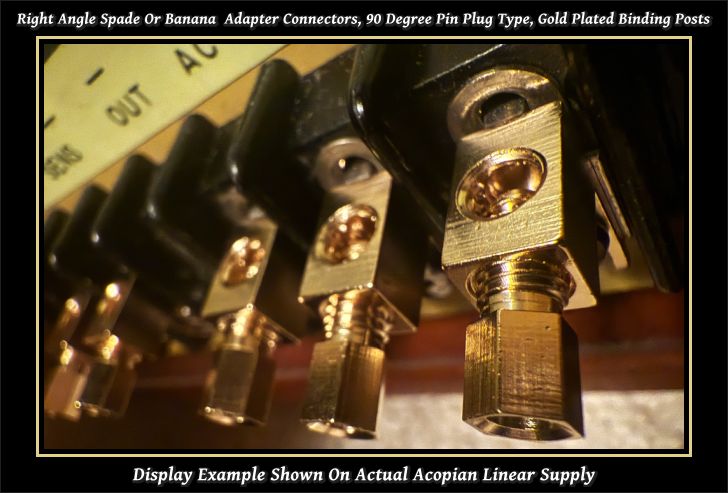
1.) 90 degree connectors are a very nice option to consider. Here is the link:
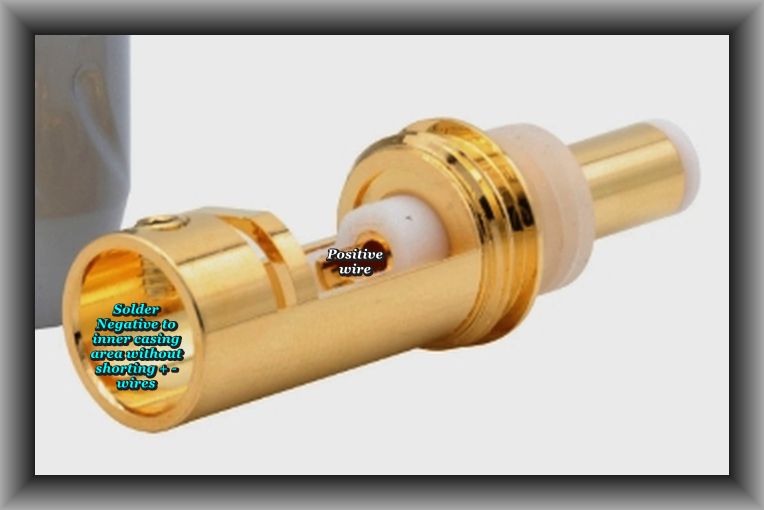
https://www.amazon.com/dp/B0B7DD1P11?ref=ppx_yo2ov_dt_b_fed_asin_title2.) DC barrel, connects onto back of Douk A5 power input.
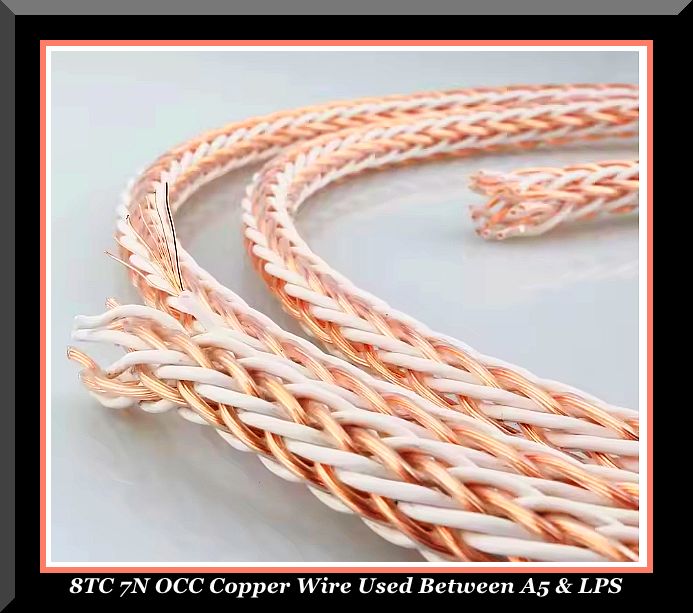
https://www.amazon.com/dp/B09L4TCTS5?ref=ppx_yo2ov_dt_b_fed_asin_title&th=13.) The wire I used to connect the Viborg DC barrel the gold plated connectors
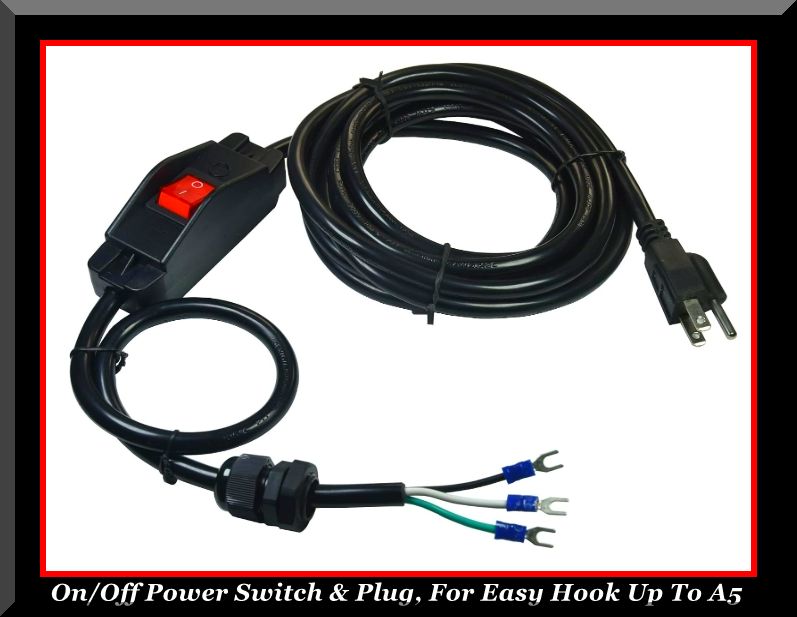
https://www.aliexpress.us/item/2255800641776414.html?src=google&gatewayAdapt=glo2usa4.) Power plug with on/off switch and terminal already added, for those who want the absolute easiest method of getting your Acopian / Douk combination up and running quickly.
https://www.amazon.com/Conductor-3-Prong-Replacement-Terminal-Pigtail/dp/B0B85GQQRP?th=1I've tallied up all the upgrade parts for usage with the A5. I've based pricing using one of the lessor expensive op-amps (SX52B's), Acopian A24H850 LPS pre-owned, and all items listed above. Your total expense for these upgrades will cost approx. $160.00 or less.
_______________________________________
_______________________________________
_______________________________________
_______________________________________
_______________________________________
_______________________________________
Results from upgrades 1.
Power Supply Upgrades (Acopian Regulated LPS) • Galvanic Isolation Benefits: Breaks the direct electrical connection between the dirty AC mains and your sensitive audio circuitry. This blocks ground loops and stops high-frequency noise from polluting the audio signal.
• Advanced Safety Regulation: Built-in industrial-grade over-voltage, over-current, and thermal protection safeguard your Douk A5 board from destructive power spikes or failures.
• Ink-Black Backgrounds: Replaces the noisy stock "wall-wart" switching supply with clean, linear regulation to eliminate high-frequency switching noise.
• Microscopic Noise Floor: Dropping the noise floor unmasks low-level ambient cues and micro-details that were previously buried in line hiss.
• Authoritative Bass "Slam": Massive, stiff reservoir capacitance delivers instantaneous current to control speaker woofers with effortless authority.
• Tighter Low-End Grip: Fast current delivery tightens up low frequencies, entirely eliminating muddy, bloated, or loose bass notes.
• Expanded Dynamic Headroom: TPA3255-based Class D architectures thrive on clean, continuous voltage, yielding effortless, uncompressed musical peaks.
• Zero EMI/RFI Pollution: Heavy, external shielding keeps stray magnetic fields and power-line interference physically away from the small amplifier chassis.
• Significantly Cooler Operation: Relieving the internal chassis of severe power regulation stress allows the entire amplifier to run much cooler.
2. Premium Discrete Op-Amp Upgrades Deliver • Unrivaled Micro-Detail Retrieval: Bespoke discrete-component topology uncovers ultra-fine musical textures, like the breath of a vocalist or guitar body vibrations, that standard IC chips miss.
• Holographic 3D Soundstage: Pushes the boundaries of depth and width, creating an immersive, holographic "wall of sound" environment.
• Ultra-Fast Transient Response: Exceptional slew rates allow the amplifier to react instantly to sharp percussion snaps and plucked strings without any artificial sharpness.
• Liquid Class-A Presentation: Imparts a fluid, organic, and velvety tone that beautifully mimics high-end solid-state Class A gear.
• Articulate Bass Layering: Separates low frequencies cleanly, letting you distinctly hear a kick drum versus a bass guitar line playing simultaneously.
• Zero-Fatigue High-End: Top frequencies become airy, extended, and incredibly resolving without any piercing sibilance or ear strain.
• Ultra-Low Total Harmonic Distortion (THD): Bespoke internal engineering drops distortion down to microscopic levels for supreme sonic purity.
3. Broad Op-Amp Rolling Options (Staccato’s Sparkos, Burson, Muses) I'm personally using Staccato's, they sound beautiful, worth every dollar.
• Eliminated "Digital Glare": Swapping out basic stock chips (like the NE5532) for premium Staccatos, Sparkos or Burson alternatives strips away the sterile or dry character often associated with budget Class D implementations.
• Custom Sonic Tailoring: Allows you to fine-tune the amp's voice—using Sparkos for absolute neutrality, Burson Vivid for forward dynamics, or MUSES02 for a smoother, tube-like warmth. The Staccato's give your the best balance of all the other's and more. They are truly in a class of their own.
• Smoother Midrange Glare: Premium op-amps smooth out the upper-midrange, making electric guitars and female vocals sound natural rather than etched or fatiguing.
• Enhanced Spatial Imaging: Drastically improves channel separation and transient response, giving pinpoint localization to vocalists and instruments.
• Natural High-Frequency Decay: Cymbals and strings decay naturally into the soundstage rather than sounding compressed, truncated, or grainy.
MY PERSONAL RECOMMENDATION:Do not use Staccato op-amps with stock GaN switching power supplies. Only use with a regulated linear power supply only. Stock switching power supples run's way to hot for Staccato's. Therefore, you risk shortening the lifespan of a premium op-amp, with a switching GaN power supply, versus regulated linear power supplies.4. Physical & Practical Notes • Tool-Free Rolling: The Douk Audio A5's tempered glass top panel makes swapping and testing different op-amps incredibly easy and straightforward.
• Chassis Height Clearance: Remind builders that while standard IC op-amps fit perfectly, tall vertical modules like Staccato or Burson discrete blocks require running the A5 with the top glass panel removed or raised. Because the latter two are larger, you'll need extenders for the Staccato's, not sure about the Burson's. I would also suggest building a taller chassis for the Burson & Staccato's as well, for protective measures.
Staccato op-amps mounted w/extenders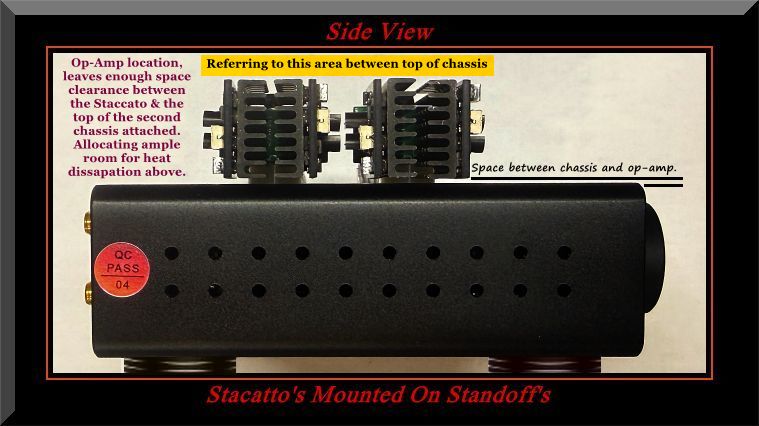
If your not interested in building a custom chassis, you could always build a acylic removable box lid, like they us on phono turntables to cover the op-amps. A removable smoked acylic box lid, asthetically, would look great too!
 Shown w/ Stacked A5 chassis's, mounted with coverage protection. *Only operate with lid off, class A Staccato's need breathing room.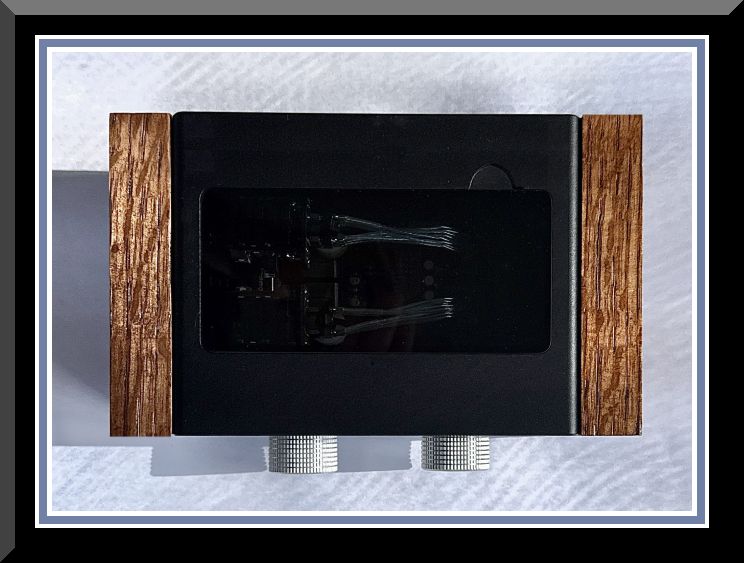
I've added some photo's of the Acopian Gold Box Style LPS, cables and plugs I used for example. These are the products I listed links to above.


 If you have the luxury of adding a tube preamplifier, this will significantly improves the audiophile performance of the Douk A5 even further.
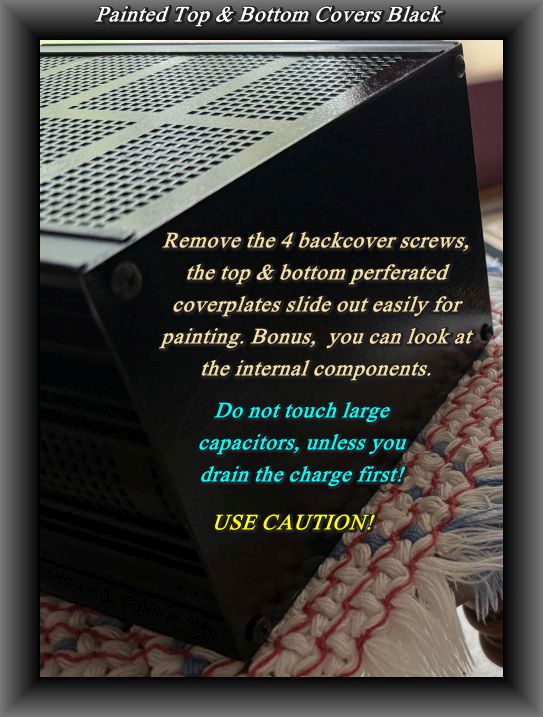
Here are a few photo examples of the top, bottom and back panels painted black. The sides are already black in color.