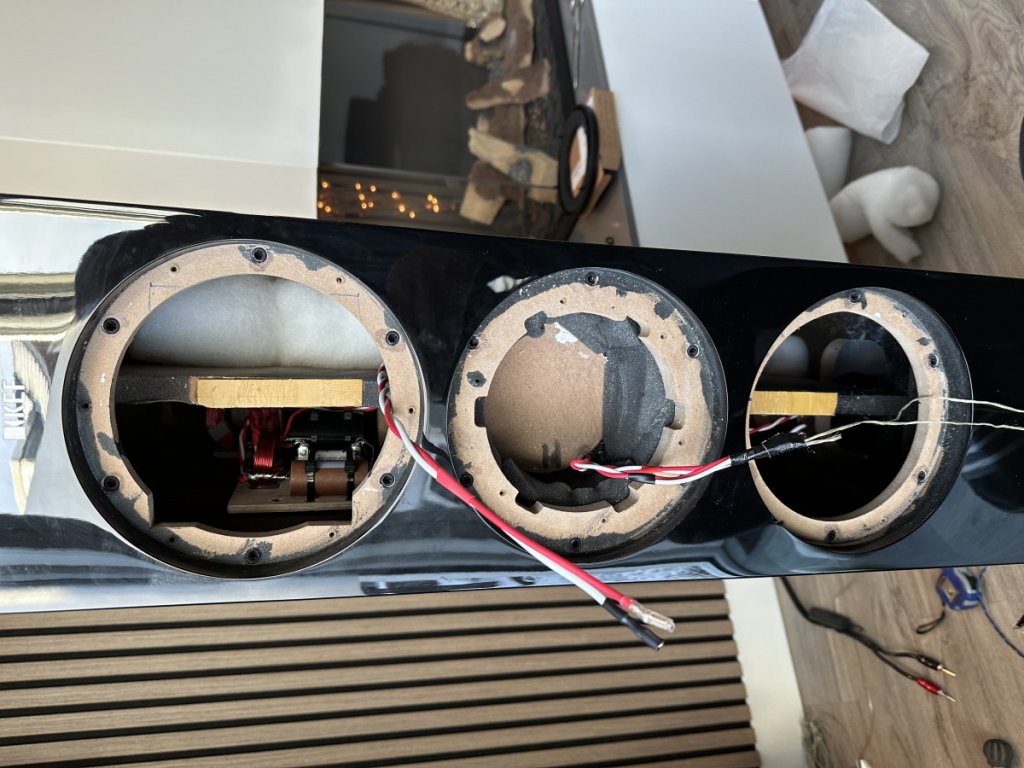
Back from holiday so I can finally share my findings on upgrading the KEF R7 meta crossover.
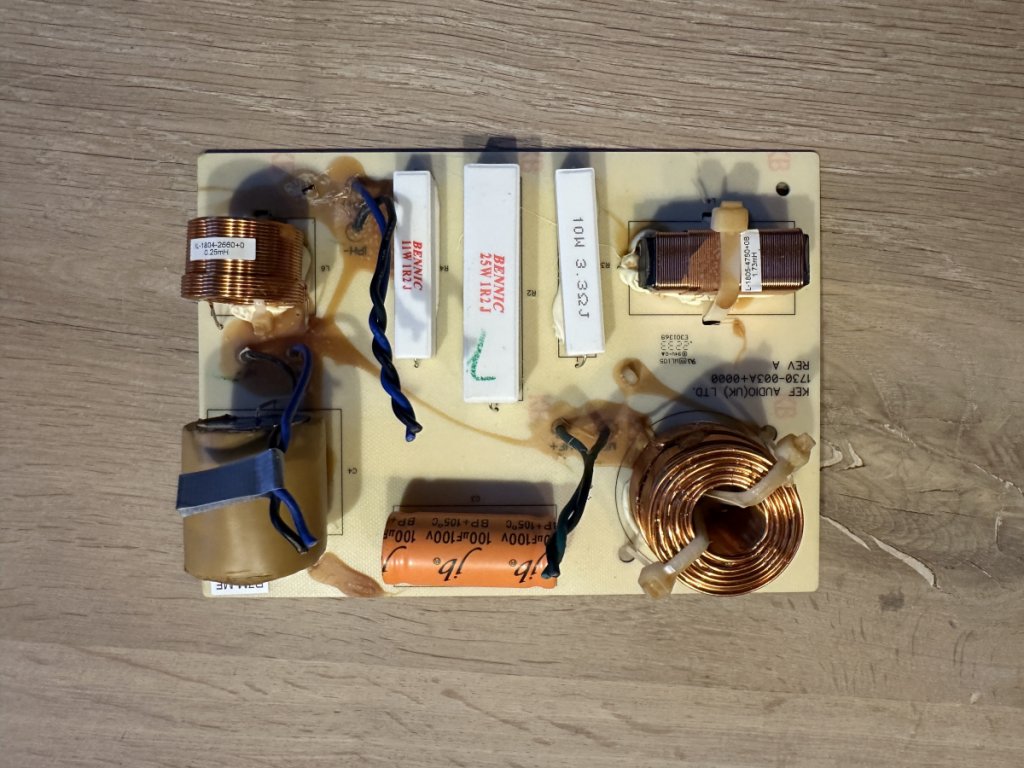
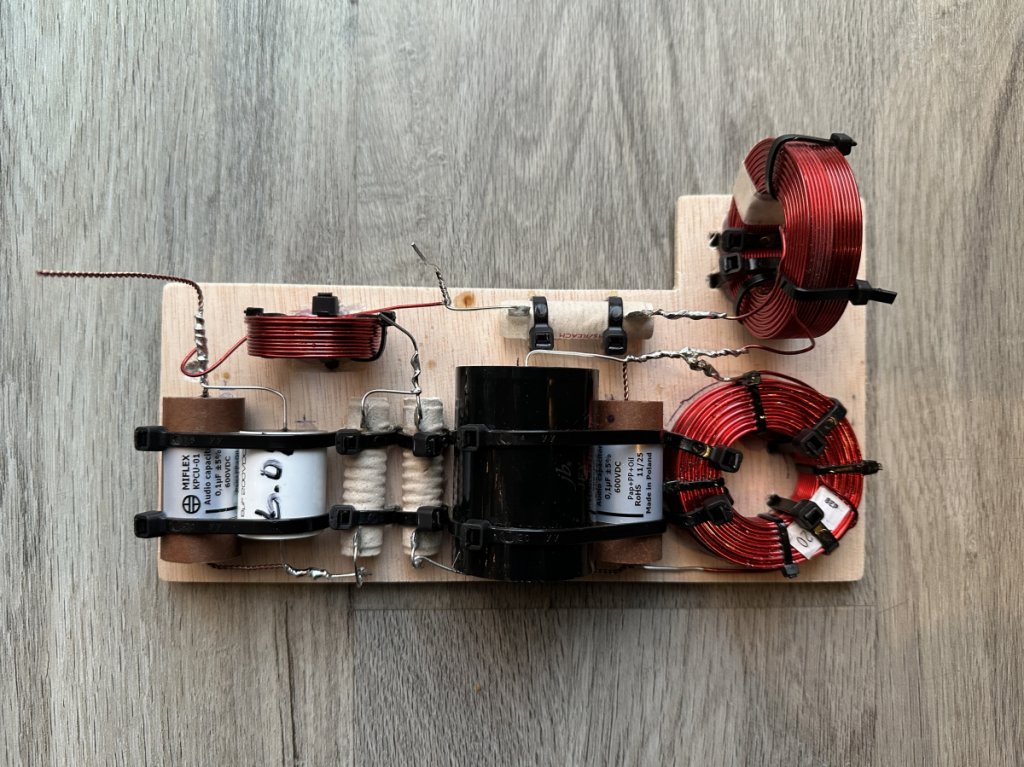
Based on the scematics and values (I read from the original crossover for the HF en MF), I got a kit from Danny. After seeing more video’s and realising I was going to do it one time right, I futher upgraded some parts. I got Mundorf mresist resistors and got some miflex bypass caps for the tweeter and midrange. Other parts I was considering were not possible due to restricted space.
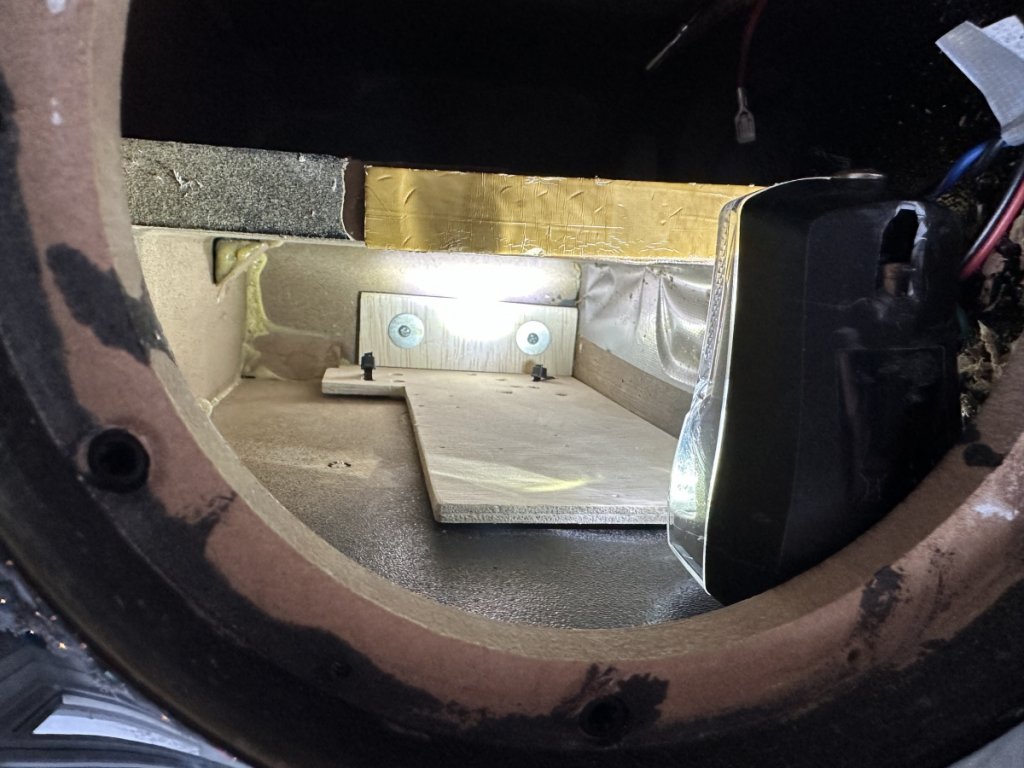
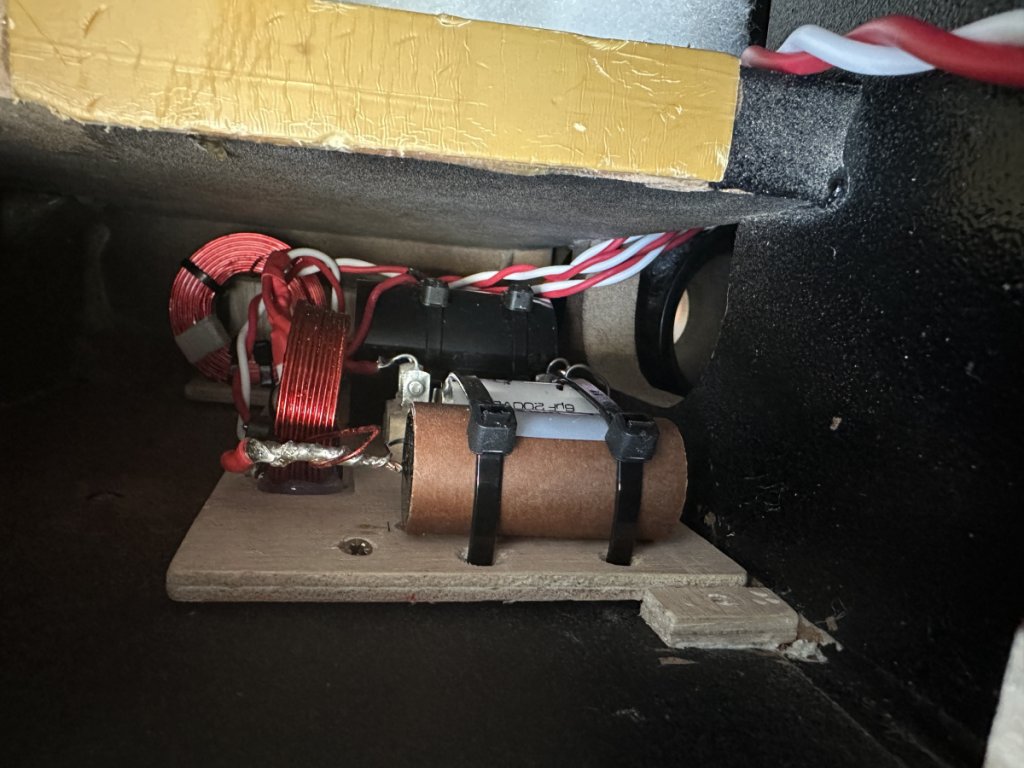
To install the board was quit a challenge, but it was succesful bij making a slot to fix it in the back of the cabinet and a screw in the front that can be reached from outside the box. I glued a little piece of plywood in the sidewall so I would be sure the crossover was positioned right. The shape of the xo-board is deliberated, because you can only move it in about 65 mm before hitting the brace in the middle. The cutouts on the left are necessary to rotate the board counter clockwise and get it as flat as possible to the sidewall. This is necessary to move it inside the speaker. Everything was first simulated in Autocad by measuring all components and the speakers inside dimensions. The layout of the xo board was also determined in autocad. A print was used as a template for drilling the holes.
And like some other comments about the crossovers of the KEF, you have to cut the little standoffs that are used for the pcb (and are glued) and flatten the cabinet on the inside. Also getting the existing wire out is a challenge. They are fixed on two ( not by hand reachable) locations with a tiewrap fixed to a staple in the wall. I had to get a large small rod and losen it.
They boards are in place for about 200 hours now and I realy like the upgrade. I does have another sound signature thought. Instead of a plane with a big spotlights on some instruments or vocals (and the rest somewhat subdued), now there is more a wall of music from left to right with solos or instruments being highlighted (especially good live recordings). It is more a compete “ picture” with things happening all over the place. It also seamed that the old xo is more forward. That makes the music appear more dynamic from time to time (and the new xo laid back) but can also be a bit fatiguing. Stage depth is not altered (as far as I’ve noticed), but my setup/placement is not ideal (speakers 4 meters apart and backside approx. 1 feet from the wall). Detail increased just a little, but in the tweeter circuit was already a reasonable clarity cap. Maybe this could be a future upgrade (other caps then sonicaps for the tweeter?). The vocals are absolutely stunning. No sharp edges at all. The smoothest i have heard with this level of commercial speakers. Probable the result of the miflex bypass caps (?) and for what i’ve read, they still have to break in for a couple of hundred hours.
Only complaint is that the hf/mf seems to be a bit attached from the low frequency. The new xo seems to have less midbase (could this be because the caps measured 98 uF instead of the rated 100 uF ?) and the difference in resolution with the existing low freq. board is (painfully) obvious.Bass appears to be sloppy/boomy. Next fase is to upgrade some parts in the low freq. crossover, connect the new wires correctly to the low xo and mount better binding posts (wbt next gen to make changing types of speakercable possible).
This already a lot of information but if somebody is interested in more info or specific details, just let me know.